
Maintaining Employee Productivity and Focus During the Holiday Season
By Ivan Petrovic, CEO, Insightful
The 2026 Holiday Shopping Season is in full swing, which is a double-edged sword for retailers. Retail's profit-making season also brings the challenge of keeping employees focused and productive.
As a platform used by hundreds of thousands of office workers, we often see a drop in productivity of as much as 15% to 30% during the holidays. People lose uninterrupted work time, and there is more task-switching and longer periods of idle time. There may also be a rise in late mornings and early clock-outs, especially in the days leading up to, or right after, a holiday.
Retail, however, is a special case. There is a massive rush around the holidays, so you will often see more patterns associated with burnout: long hours as you approach Black Friday, followed by a crash in productive time the week after. Then an even bigger surge through Christmas, followed by another crash that can last until New Year’s or even into mid-January.
A 5% productivity drop in April is easy to ride out, but a 5% drop during Black Friday week can kill profits for the whole year.
Leaders need data to understand how their people actually work during this time of year.
When you can see which hours and which work produce most of your output, you can properly staff those windows and give people time off during the quieter stretches.
— Ivan Petrovic, CEO, Insightful


Katelyn Daniell is an innovative leader in the digital and retail sectors. She’s co-founder of Precision Retail, an AI-powered survey tool for capturing zero-party data, and mplus, a tech stack solution for optimizing digital advertising.
Katelyn is passionate about building retailer-customer relationships through sustainable value exchanges and zero-party data. This venture is already making waves in the industry by enabling retailers to engage with their customers in more meaningful and impactful ways.
Since December 2021, Katelyn has also been the co-founder of mplus, where she has played a crucial role in the company's growth and success. Her leadership has been instrumental in establishing mplus as a key player in the digital adtech market.
Prior to her entrepreneurial endeavors, Katelyn served as the Chief Commercial Officer at MCap Group from August 2019 to July 2020. She has extensive experience at Dentsu Aegis Network where, over five and a half years, she held various positions, including Commercial Director, Digital Investment Manager, Digital Investment Supervisor, and Digital Strategist. Her responsibilities included managing revenue diversification, adopting new commercial models, overseeing media and ad tech supply-side management, and leading digital investment for major retail and CPG brands.
While traditions matter during the holidays, the traditional management mindset of equating desk presence with productivity simply doesn't hold up.
Even dedicated employees naturally get distracted by holiday planning and year-end time off. Instead of fighting human nature, progressive companies adapt by offering flexible and remote hours. Letting workers run holiday errands midday and make up the time later is a win-win: employees get seasonal breathing room, and employers get genuine, focused productivity.
Some of the best methods to keep everyone on task are simple. Publish a clear holiday schedule early, and replace long meetings with quick, 15-minute daily standups focused on top priorities.
Set consistent expectations across the entire company; morale plummets if the back office coasts while the retail floor is slammed. Finally, leverage technology to manage hybrid schedules and spot productivity dips early, freeing managers to spend less time tracking tasks and more time directly supporting their teams.
Here are three simple steps to maintain a high level of efficiency:
Maintaining Employee Productivity and Focus During the Holiday Season
Plan coverage deliberately. Rotate time off so each team always has enough people working. Roughly 60% to 70% back-office coverage is a good rule of thumb.
Make sure no critical workflow depends on a single person.
Protect focus time for the people who are working. Aim for fewer meetings, or 15-minute daily standups focused on top priorities.
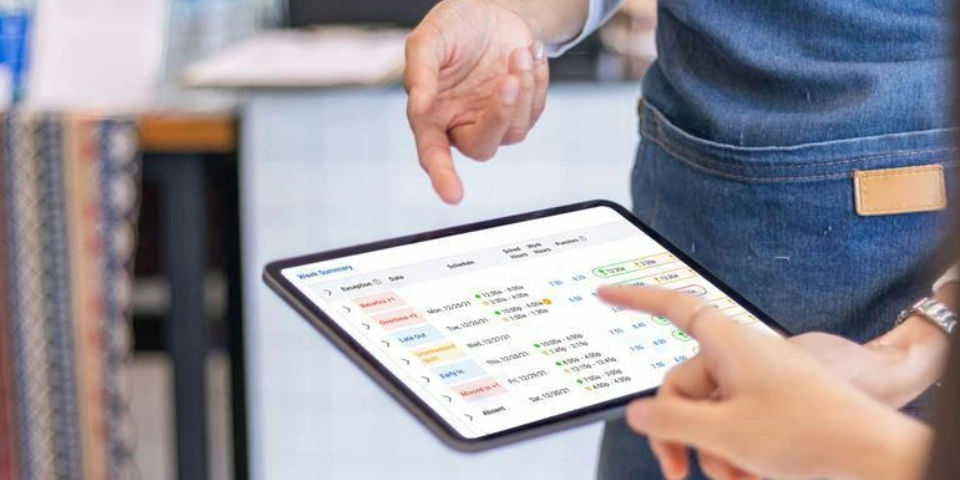
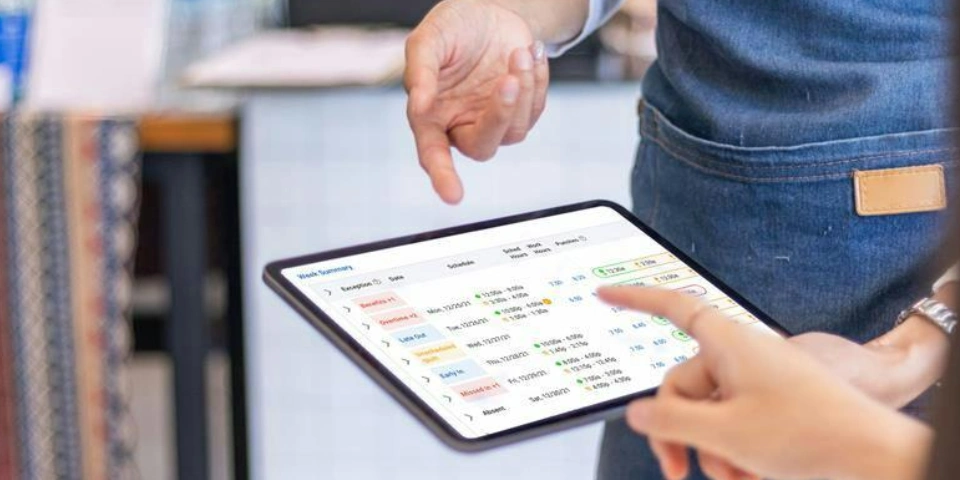
Deciding how your people should work must be based on data, not gut feelings. When you can see which hours and which work produce most of your output, you can properly staff those windows and give people time off during the quieter stretches. For back-office and desk-based teams, this is where technology can help the most.
Workforce Productivity Planning During the Holidays
Prior planning is key to having a well-oiled, focused staff across an organization. The most obvious mistake an organization can make is treating Q4 like any other quarter, with no extra staffing plan and no change to how often teams communicate. The holiday calendar is known months ahead of time, so the plan should be too.
The first part of the puzzle is knowing how your team actually works, and not just in November and December. Understanding where a team’s time goes is a year-round exercise.
Keep in mind that it’s a mistake to treat productivity technology as a surveillance tool rather than an optimization and enablement tool. If you simply “watch people harder,” you’ll lose your best people in January and end up with the same issue next year.
Retail leaders who treat every Q4 as a learning moment do better than those who follow the old-school mindset of just putting butts in seats or forcing them to work from the office. Learn from your peak-demand period which work patterns actually drive results, then take specific steps to change those patterns next time.